Thursday, September 17, 2026

El Espacio 23: More than 27,000 of solidarity letters reach Luis Manuel Otero Alcántara


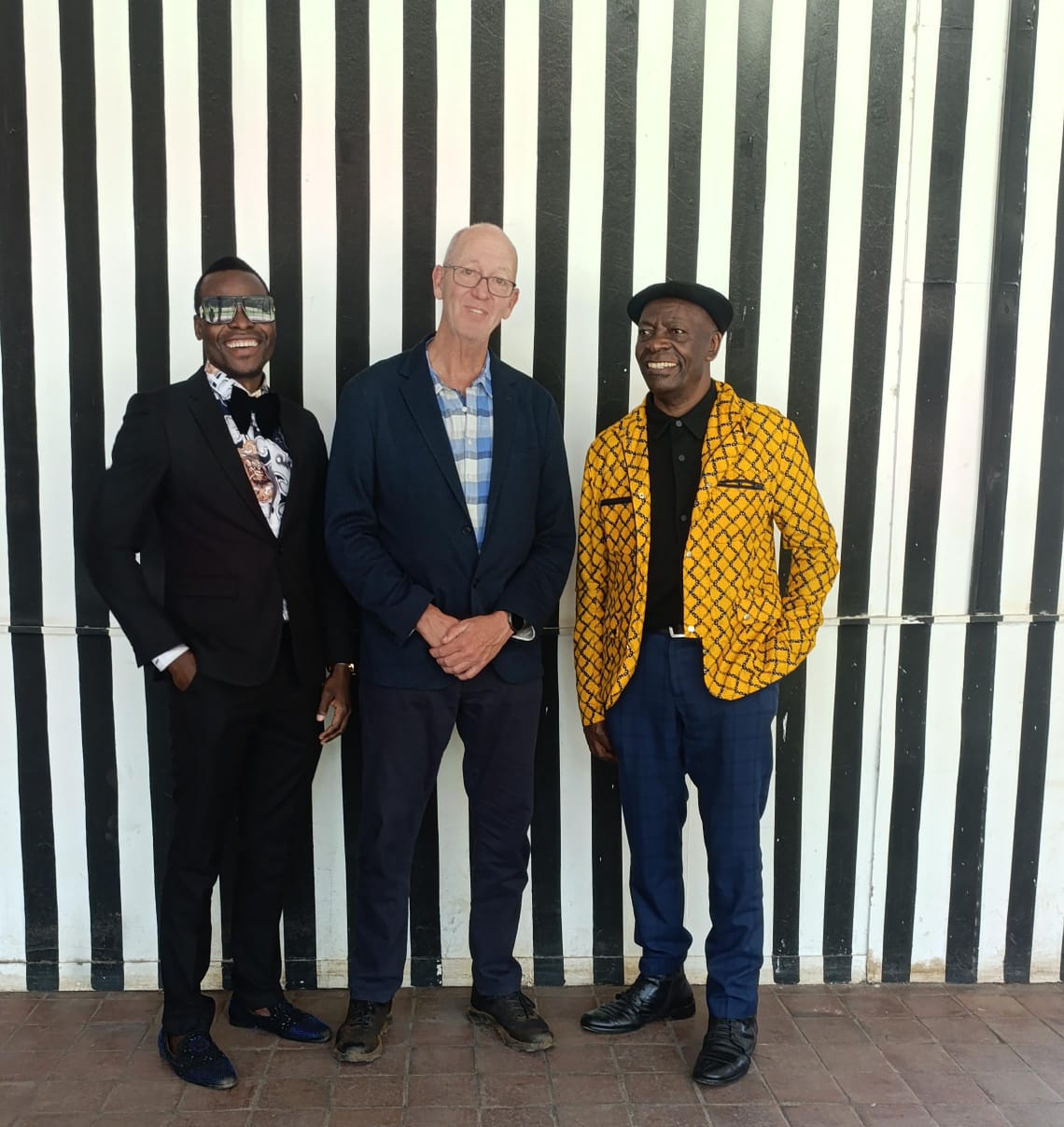
Following the symbolic delivery of more than 27,000 letters of solidarity to Cuban artist and activist Luis Manuel Otero Alcántara in private event at El Espacio 23 in Miami, Amnesty International said: 

“Today, thousands of messages of solidarity finally reached Luis Manuel Otero Alcántara in person. Each letter is a reminder that, even when the Cuban authorities tried to silence and isolate him behind prison walls, people around the world continued to stand with him demanding his freedom. 

Luis Manuel should never have spent a single day in prison for his art, his activism, or for peacefully expressing his views. His freedom today does not erase nearly five years of injustice, nor the fact that he was forced into exile. The Cuban authorities must release all those imprisoned solely for exercising their human rights and guarantee that Luis Manuel can return to Cuba, if he so chooses, without surveillance, threats or reprisals,” said Astrid Valencia, Deputy Director of Research for the Americas at Amnesty International. 

Luis Manuel Otero Alcántara is a Cuban artist and activist known for using his art to defend freedom of expression and challenge restrictions on artistic and civic space in Cuba. Designated as a prisoner of conscience by Amnesty International, he was sentenced to five years in prison in June 2022 after being arbitrarily detained in July 2021.  After nearly five years unjustly deprived of his liberty, he was released in July 2026 and forced into exile. He is now living in Miami, where he continues his artistic work and advocacy at El Espacio 23. 

The event, hosted at El Espacio 23 in Miami, brought together Luis Manuel, Amnesty International and members of the Cuban artistic, activist and human rights community who have stood with him throughout the years. The gathering also highlighted the essential role of art and solidarity in resisting efforts to silence critical voices and preserving spaces where people can express themselves freely. 

“Bringing Luis Manuel and these thousands of letters together at El Espacio 23 is a reminder of what happens when a community refuses to let an artist’s voice disappear. Miami has always been a place where artists, ideas and people from across Latin America come together,” said Jorge M. Pérez, philanthropist, art collector, and founder of El Espacio 23. “The response to this campaign shows just how deeply his work has resonated beyond Cuba. We’re proud to have Luis Manuel here, where he can connect, share perspectives and be part of a community that believes in the power of art to create conversation and drive change.”  

The delivery of the letters marks a powerful moment for Luis Manuel and the thousands of people who mobilized for him, but the work is not over. Amnesty International will continue calling on the Cuban authorities to immediately and unconditionally release all those imprisoned solely for exercising their human rights and to end the repression and criminalization of artists, activists, journalists and others who peacefully express dissenting views. 

Celebrate Hispanic Heritage Month with NSU Art Museum

CELEBRATE HISPANIC HERITAGE MONTH WITH

NSU ART MUSEUM FORT LAUDERDALE

Installation image of Wifredo Lam's Legacy, 2026

Discover Wifredo Lam’s Legacy


This Hispanic Heritage Month, celebrate the cultures, identities, and artistic traditions that shape Latin American art through Wifredo Lam’s Legacy at NSU Art Museum Fort Lauderdale.


Born in Cuba in 1902 to a Chinese immigrant father and Afro-Cuban mother, Wifredo Lam became a groundbreaking transnational artist whose work brought together Surrealism, Afro-Cuban traditions, African identity, and the tropical landscape.


Featuring works drawn exclusively from the Museum’s collection, the exhibition explores Lam’s lasting influence on generations of Cuban and Latin American artists, including José Bedia, Ana Mendieta, María Magdalena Campos-Pons, Kcho, Los Carpinteros, and others.


Lam’s legacy is a testament to the power of art to transcend borders, connect cultures, and inspire new generations. Celebrate Hispanic Heritage Month with us and discover Lam’s legacy.

Friday, September 11, 2026

The Frank C. Ortis Art Gallery in Pembroke Pines presents ‘Hyphenated Encounters’ & ‘Discord and Serenity’ Opening September 17th


The Frank C. Ortis Art Gallery in Pembroke Pines presents two new exhibition projects opening September 17, 2026: Hyphenated Encounters, a collaborative presentation with Deering Estate featuring the work of Cuban American artist Lilian Garcia-Roig, and Discord and Serenity, curated by RemiJin Camping and featuring works by Barry University MFA students Joy Johnson and Bruna Marcon Weber. Hyphenated Encounters brings together two interconnected curatorial projects—Lilian Garcia-Roig: A Practice of Place, curated by Sophie Bonet, Chief Curator of The Frank C. Ortis Art Gallery, and Deering Estate Residency: Lilian Garcia-Roig, Site, and the Labor of Belonging, curated by Liliam Dominguez, Head Curator of Deering Estate. Together, these presentations offer audiences an expansive exploration of place, identity, memory, perception, and the complex inner and outer worlds explored through contemporary art.


Art lovers and aficionados are cordially invited to enjoy the Opening Reception for these new exhibitions on Thursday, September 17th from 6 – 9pm at The Frank C. Ortis Art Gallery for an evening of art, conversation, and exploration. Light refreshments will be served, and the event is free and open to the public. The Frank is located at 601 City Center Way in Pembroke Pines, Florida 33025. Opening that evening, Hyphenated Encounters brings together two interconnected curatorial projects presented in collaboration with Deering Estate, while Discord and Serenity will be presented separately in The Frank Third Space. Together, these exhibitions offer audiences an opportunity to explore questions of place, identity, memory, perception, emotion, and the complex relationship between what is seen and what remains hidden.

Image Courtesy of Deering Estate. Photo: Jorge Gonzalez Graupera

Hyphenated Encounters: A Practice of Place

Spanning more than three decades of artistic practice, Lilian Garcia-Roig: A Practice of Place brings together a selection of paintings and mixed-media works by Cuban American artist Lilian Garcia-Roig. The exhibition traces the evolution of her sustained engagement with landscape, revealing how close observation, material experimentation, and lived experience have shaped a practice rooted in place. From the subtropical environments of South Florida to the limestone valleys of Cuba, Garcia-Roig’s work invites viewers to experience landscape as something inhabited rather than simply observed.

Lilian Garcia-Roig, Palm Strangler, 2024. Oil on canvas, 48 x 36 in. Courtesy of the artist.

A recipient of a John Simon Guggenheim Memorial Foundation Fellowship, Garcia-Roig is recognized as one of the leading voices in contemporary landscape painting. Together, the works on view offer a compelling survey of an artistic practice that continues to evolve while remaining deeply connected to the environments that inspire it. Curated by Sophie Bonet, Chief Curator, The Frank C. Ortis Art Gallery. Hyphenated Encounters will be on view at The Frank in the Main Gallery from September 17, 2026, through January 17, 2027. Admission is free and open to the public Wednesday through Sunday from 11am to 5pm.

Lilian Garcia-Roig, Fluid Perception: Banyan as Metaphor, 2022. Oil on canvas, 168 x 240 in. Courtesy of the artist.

Deering Estate Residency: Lilian Garcia-Roig, Site, and the Labor of Belonging

Part of the Deering Estate AT program, this exhibition features Lilian Garcia-Roig, who is widely recognized as an on-site painter, though the term only begins to describe her practice. Rather than painting a landscape from a distance, Garcia-Roig paints directly with it, treating each location as a living field of negotiation between memory, perception, and presence. Over time, the tropical landscape has become essential to her visual language. Florida’s banyans, mangroves, sabal palms, and strangler figs offer a natural vocabulary that speaks to her Cuban heritage, one built on entanglement rather than hierarchy, and on lateral growth and survival rather than singular dominance.

Lilian Garcia-Roig, Hyphenated Nature: Two Rocks of Geographic Significance to Me (Skykomish River in WA & El Morro in Havana Harbor), 2020. Oil on canvas (left) & Acrylic with Cuban dirt pigment on canvas (right), 36 x 70 in. Courtesy of the artist.

During her 2024 residency at the Deering Estate, Garcia-Roig immersed herself in the property’s own tangled terrain, working directly on-site. The resulting body of work reflects a sustained, site-specific engagement, continuing her long practice of letting the landscape shape the painting rather than the other way around. Complementing Garcia-Roig’s work, an exclusive short film created by fellow Artist-in-Residence Jorge Gonzalez Graupera deepens the viewer’s connection to these themes. Curated by Liliam Dominguez, Head Curator, Deering Estate.

Bruna Marcon Weber

Discord and Serenity

Discord and Serenity brings together the work of Joy Johnson and Bruna Marcon Weber, two Barry University MFA students whose analog photographic practices explore the complex interior worlds that exist beneath the surface of everyday life. Working through staged environments, personal objects, domestic spaces, and analog processes, Johnson and Marcon Weber consider how emotions and desires are internalized, concealed, and ultimately expressed. Their photographs transform familiar spaces and objects into sites of psychological inquiry, revealing the tensions between what is visible and what remains hidden, between composure and release, and between the identities we inhabit publicly and the experiences we carry within. In What Can the Space in a Room Hold?, Johnson approaches the subconscious as an interior space—one populated by objects, memories, associations, and aspects of the self that may be revealed or kept behind a closed door. Through personal objects and environments, her photographs invite viewers to consider what their own internal spaces might contain.

Joy Johnson

Marcon Weber’s Rare Opportunities to Be Alone turns toward the domestic sphere, examining suppressed anger, emotional restraint, and the often-unseen pressures associated with caregiving, family life, and reproductive and domestic labor. Using staged color photographs made on 120 film, she reimagines familiar rooms and household objects as expressions of emotions that are ordinarily contained. Together, the two bodies of work create a dialogue between discord and serenity, asking what happens when private emotions enter visible space—and what photography can reveal about the parts of ourselves that are difficult to articulate. Curated by RemiJin Camping. Discord and Serenity will be presented in The Frank Third Space from September 17, 2026, through January 17, 2027. Admission is free and open to the public Wednesday through Sunday from 11am to 5pm.

The Frank C. Ortis Art Gallery

The community can learn more about the City of Pembroke Pines’ latest Events by subscribing to Pembroke Pines Media on YouTube, to NewsFlash, a twice a month digital newsletter at www.ppines.com/Newsflash, by reading the city’s digital newspaper City Connect and website via www.ppines.com, checking the city’s digital signage, or by visiting the City’s Facebook page at www.facebook.com/cityofpembrokepines, and @cityofppines for Twitter and Instagram. Residents with Comcast can view Pembroke Pines Media programming on Channel 78.

For more information visit www.thefrankgallery.org
Follow The Frank Gallery on Instagram @thefrankpembrokepines

Miami Artist Shadia Sabagh Launches “Mirror” on Kickstarter, Where Sculptural Design Meets Self-Worth


Detail: Mirror, soft sky blue, the 16-point radial frame casting shadow against walnut. Brickell, Miami, 2026. Courtesy of Shadia Sabagh.


Miami artist and creative director Shadia Sabagh introduces Mirror, a new sculptural object shaped by her own practice of self-worth and self-love, now available on Kickstarter through September 22, 2026. Created from Sabagh’s evolving resin practice, Mirror marks her first project made and released entirely on her own terms. Hand-cast in polyresin with a soft sky blue finish, Mirror features a 16-point radial frame and measures 17.71 inches high by 10.30 inches wide and 2.36 inches deep. Each piece is hand-sketched, 3D-rendered and molded, then hand-finished, with minor, intentional variations from piece to piece. The limited edition is a run of 2,000, and each Mirror includes 120 digital self-worth and self-love affirmation cards, yours to keep and use however you practice.

Shadia Sabagh at home, surrounded by the objects and books that built the eye. Brickell, Miami, 2026. Courtesy of Shadia Sabagh.

More than a functional object, Mirror reflects a philosophy that has increasingly shaped Sabagh’s creative practice: the belief that self-worth is something that must be practiced, protected, and consciously built. The project brings together art, sculpture, design, and personal ritual, transforming an everyday object into a visual reminder of that philosophy.

Mirror, resin, sky-blue finish, shown at close range on the entryway console beside a stack of books. Brickell, Miami, 2026. Courtesy of Shadia Sabagh.

For Sabagh, the work begins with a personal practice that has been part of her daily life for years. “Mirror work has been part of my morning routine for years — I journal, then I do affirmations for self-worth and self-love,” Sabagh says. “I wanted Mirror to carry that same energy: not just a sculptural piece, but something that reminds you to love yourself every time you look into it.” Sabagh describes Mirror as both a sculptural design piece and a reminder to practice self-worth and self-love. “I want Mirror to not just be a sculptural design piece, but also serve as a reminder every time you look at it — to love yourself the way you want others to love you. First, always.”

Mirror, resin, sky-blue finish, propped on an oxblood entryway console against walnut paneling. Brickell, Miami, 2026. Courtesy of Shadia Sabagh.

Sabagh’s professional identity spans art, creative direction, and collectible objects. Through Shadia Sabagh Studio and Studio 888 by SS, she works across original art, hand-carved wall sculpture, collectible objects, brand experiences, and journal editions. Her studio has worked with major brands including YSL Beauty, Carolina Herrera, L’Oréal, NYX, Bacardi, CeraVe, New Balance, and Airbnb. Mirror, however, represents a different kind of creative chapter. The piece is the result of three years developing Sabagh’s resin practice, a process she describes as self-taught and self-funded. Her movement toward sculptural, three-dimensional work developed gradually.

Mirror, resin, sky-blue finish, on the entryway console with abstract leaf-form bookends and a stack of books. Brickell, Miami, 2026. Courtesy of Shadia Sabagh.

“I’ve moved slowly from painting on canvas, to painting on paper, and now into sculptural, three-dimensional work,” she explains. “My first design object collection launched last fall and did well. Mirror is just the next step.” Sabagh describes the project as her first fully self-authored campaign — work created and released on her own terms rather than for a brand or as an assignment. “I’ve spent years turning other people’s ideas into gold. Mirror is mine.”

Mirror, resin, sky-blue finish, wall-mounted above the vanity, the 16-point radial frame shown at close range. Brickell, Miami, 2026. Courtesy of Shadia Sabagh.

Sabagh’s process combines hand-drawn development with digital modeling and physical production. “I sketched Mirror by hand, then built it out as a 3D render,” she says. “I wanted it perfect, and I knew I couldn’t get that level of quality — or that scale — carving it myself. That’s why this needed a real production run.” The resulting object is wall-mounted and produced in hand-cast polyresin, allowing the distinctive 16-point radial frame to hold its shape and detail. Each piece is individually finished, preserving minor variations between works. For Sabagh, the production process also reflects a practical decision about scale and investment. “This piece needed a bigger investment than I could make alone,” she says. “I’d also rather launch the pieces I needed to test first — Mirror is the one I was finally ready for.”

Shadia Sabagh in her home studio. Brickell, Miami, 2026. Courtesy of Shadia Sabagh.

Bringing Mirror into production required Sabagh to think beyond the studio and consider a different kind of relationship between artist, object, and audience. Kickstarter offered a way to make that relationship direct, allowing the project to be supported by the people who connect with the idea behind the work.

Mirror, resin, sky-blue finish, on the entryway console beside a brass bowl, the hallway opening beyond. Brickell, Miami, 2026. Courtesy of Shadia Sabagh.

Sabagh chose Kickstarter as a new way to fund and bring Mirror directly to an audience. “I wanted to try crowdfunding — I’d never done it before, and it’s a way to fund a project beyond what I bootstrap myself,” she explains. The Kickstarter campaign runs from August 24 through September 22, 2026, with a funding goal of $28,200. Backers can choose between two tiers: The Mirror – Soft Sky Blue, priced at $550, and The Mirror – Signed in the Back, priced at $575. Estimated delivery is December 2026. The piece ships from Miami, with domestic shipping included in the pledge, while international backers can receive a shipping quote before pledging. Any damage in transit is to be reshipped from Miami at no cost. Mirror will also be shown in person at The Other Art Fair: Los Angeles, September 24–27, 2026, at Barker Hangar in Santa Monica.

Detail: Mirror, soft sky blue, the 16-point radial frame casting shadow against walnut. Brickell, Miami, 2026. Courtesy of Shadia Sabagh.

For Sabagh, Mirror is also the beginning of a broader independent chapter. The project stands apart from the brand collaborations that have formed a significant part of her studio practice, while remaining connected to the creative development that has shaped her work across art, design, and commercial environments. Her next phase includes the upcoming launch of Studio 888, which she describes as a platform for brand work and her own journal editions, as well as another Kickstarter planned for November. “I spent sixteen years finding my own purpose — asking the questions it takes to get there,” Sabagh says. “What’s next is a program that gives people a shortcut to find theirs, with a map to follow it. That’s part of Studio 888.”

Mirror, resin, sky-blue finish, wall-mounted in the powder room among framed prints and works on paper. Brickell, Miami, 2026. Courtesy of Shadia Sabagh.

For now, Mirror stands as a tangible expression of that journey: a sculptural object developed from a deeply personal practice and brought into the world through a direct, self-authored campaign. Shadia Sabagh works across original art, hand-carved wall sculpture, and collectible objects through Shadia Sabagh Studio, and runs Studio 888 by SS for both brand experiences and her own line of journal editions.

For more information visit www.shadiasabagh.com

Follow Shadia Sabagh on Instagram @shadiasabaghstudio

Learn more and support Sabagh’s Kickstarter campaign.

Thursday, September 10, 2026

First U.S. Museum Solo Exhibition for Sheroanawe Hakihiiwe Debuts in November at ICA Miami, a Joint Presentation with the Fondation Cartier pour l’art contemporain


The landmark exhibition explores more than 25 years of the Venezuelan artist’s expressions of Indigenous Amazonia, including new site-specific commissions

Sheroanawe Hakihiiwe, Puu motho shipe (Stinging Vines), 2023. © Sheroanawe Hakihiiwe


The first solo U.S. museum exhibition by artist Sheroanawe Hakihiiwe (b. 1971, Sheroana, Venezuela) opens this November at the Institute of Contemporary Art, Miami (ICA Miami), ahead of Miami Art Week. A joint presentation with the Fondation Cartier pour l’art contemporain, Sheroanawe Hakihiiwe comprises more than 100 works, including pieces from the Fondation Cartier’s collection as well as new commissions across a variety of media, to reveal the artist’s distinct pictorial lexicon and relationship with the natural world. Opening November 19, Sheroanawe Hakihiiwe is co-curated by Gean Moreno, Director of the Art + Research Center at ICA Miami, and Michela Alessandrini, Curator at the Fondation Cartier. The exhibition reflects the two institutions’ shared commitment to representing the significance of human relationships to the environment in their programs. 

Hakihiiwe is among the most important Venezuelan artists working today on an international scale. A member of the Yanomami people, one of the largest Indigenous groups living in Amazonia, Hakihiiwe was raised and still lives in the remote Poripori community along the banks of the upper Orinoco River. He draws inspiration from the vestiges and forms of the flora and fauna found in the forest where he resides. Through his practice, Hakihiiwe builds new visual languages to record his cultural heritage, ancestral myths, and ties to the environment. Best known for his drawings, paintings, and prints on handmade paper, the Miami exhibition highlights the artist’s continued material investigations, including animation, murals, and site-specific installations.

In his practice, Hakihiiwe emphasizes the connectivity of all life forms alongside the vulnerable state of Indigenous approaches. “Everything you can see is beautiful, but it’s all at risk of disappearing, including my family, my community, the language we speak, and everything I know in the forest—animals, plants, rivers, even me,” remarked the artist in 2023 at the opening of Siamo Foresta in Milan, organized by Fondation Cartier.

“Sheroanawe Hakihiiwe's work offers a glimpse into vast Indigenous knowledge systems through a visual language that is as meticulous and rich as the natural world and cultural traditions from which it emerges. At ICA Miami, we are dedicated to exhibiting work that reveals the complexity and breadth of artistic production around the world, creating a bridge to globally significant artistic practices that have not yet received sustained institutional recognition in the United States. It is especially meaningful to present this landmark exhibition in Miami, given the city's enduring connections to Latin America and its position as a vital cultural crossroads in the Americas,” noted Alex Gartenfeld, Irma and Norman Braman Artistic Director at ICA Miami.

The exhibition at ICA Miami tracks the evolution of Hakihiiwe’s oeuvre from his foundational works on paper to his latest explorations across media through four distinct sections. The first section, Building a Language, follows the artist’s earliest efforts to develop and refine his approach for visually transmitting the Yanomami cultural experience, including his seminal work, Shapono. The following section, Notational Systems and Encyclopedic Exercises expounds on Hakihiiwe’s taxonomic impulses, beginning with the indexical systems he began to develop in the early 2010s.  The third section, Landscapes, sees the artist widening both the lens and form of his compositions to include larger tableaus and new materials. The final section, Shamanic Initiation, examines the effects of the artist’s recent shamanic training, including the power of dreams and images that bridge the visible and invisible worlds. Shamanic Initiation showcases Hakihiiwe’s latest works, including a new film soundtracked by the artist’s chanting, a site-specific mural, and a site-specific installation featuring a set of shamanic poles.

The exhibition is designed by the renowned Mexico City-based architect Mauricio Rocha, and his studio Taller de Arquitectura. Inspired by the atmospheric qualities of the traditional Yanomami housing (shapono), Rocha's architectural vision transforms filtered light, natural earth pigments, and framed views of the surrounding landscape into a contemplative spatial experience, inviting a slow encounter with Sheroanawe Hakihiiwe's visual language and its profound connection to the forest.

Sunday, September 6, 2026

What Does It Mean to Inhabit a Body Shaped by Illness? Dana Donaty’s “Florida Blue, The Revenue Stream”


Dana Donaty's ‘Florida Blue, The Revenue Stream’

South Florida contemporary artist Dana Donaty explores illness, women’s health, historical erasure, and the systems that shape how women’s bodies are understood through a new punch needle work created during her time at the Chanorth Art Residency. 

What does it mean to inhabit a body shaped by illness?

For artist Dana, that question has become the starting point for an ongoing investigation into the ways illness can transform not only the body, but also the experience of time, relationships, and belonging.

Florida Blue, The Revenue Stream, completed in 2026 during Dana’s time at the Chanorth Art Residency, is part of a new punch needle series exploring those questions through material, research, grief, rage, and memory.

Over the past decade, illness has changed far more than Dana’s body. It has altered how she experiences the world around her, prompting a deeper investigation into the history of women’s health, medicine, and the ways women have been understood—or misunderstood—within medical and social systems.

“I started there, but the research kept expanding,” Dana explains.

As she moved through those histories, she began to recognize that experiences that had initially felt deeply personal were also part of a much longer lineage of exclusion, dismissal, and erasure.

And, unexpectedly, that realization brought some comfort.

Doctors have often made it sound as though she is uniquely complicated rather than acknowledging the limits of medical knowledge and research.

“Different century. Same shit.”

What began as an attempt to make sense of her own experience has therefore become a broader investigation of the historical and systemic forces that shape how women’s bodies are understood, cared for, and remembered.


Dan Donaty's ‘Florida Blue, The Revenue Stream’ Side 2


Florida Blue, The Revenue Stream

Created in 2026, Florida Blue, The Revenue Stream combines acrylic yarn, Marino wool, Mongolian cashmere, pink mirrored plexiglass, twisted nylon mason line, grief, and rage.

The work unfolds across two sides.

Side 1 is grounded in the present, where illness can pull the body into systems that manage rather than care. Here, the river becomes a figure for the extractive flow of contemporary healthcare.

Side 2 turns toward the past, tracing a lineage from women persecuted for their healing practices to the institutions that continue to govern women’s health today.

Together, the two sides ask a larger question: How do the currents of history move through women’s bodies?

Through the language of fiber and the physical labor of punch needle, Dana brings together personal experience, historical research, material memory, and social critique. The resulting work becomes both an exploration of her own lived experience and an examination of the larger systems that have shaped women's relationships with medicine, authority, care, and the body.


Dana Donaty Studio


A Continuing Investigation

Rather than offering a single conclusion, Florida Blue, The Revenue Stream forms part of Dana’s continuing investigation into women’s health and the historical structures surrounding it.

The work connects the intimate realities of illness with a broader cultural history, asking viewers to consider what is remembered, what is erased, who is believed, and what happens when institutions continue to govern bodies without fully understanding them.

Florida Blue, The Revenue Stream is currently included in A Pixel Ring, an online exhibition presented by Field Projects Gallery and curated by @herlovelyface, @jacobrhodes74, and Elizabeth Harris.

View the exhibition:
www.fieldprojectsgallery.com/a-pixel-ring

Florida Blue, The Revenue Stream, 2026
Acrylic yarn, grief, Marino wool, Mongolian cashmere, pink mirrored plexiglass, rage, twisted nylon mason line.


Dana Donaty's ‘Florida Blue, The Revenue Stream’ detail pic


Wednesday, September 2, 2026

Must-See exhibition at PAMM, John Baldessari: The End of the Line


John Baldessari. Tetrad Series: What Was Seen, 1999. Inkjet print on canvas; acrylic and enamel paint on canvas, in four parts. 94 x 94 inches overall. Craig Robins Collection. © 1999–2026 John Baldessari Family Foundation. Courtesy Estate of John Baldessari; Sprüth Magers


John Baldessari: The End of the Line

August 20, 2026 – May 9, 2027


Pérez Art Museum Miami (PAMM) presents the first major survey in South Florida devoted to John Baldessari (1931–2020), a leading pioneer of conceptual art. The exhibition features a selection of forty works spanning painting, photography, video, and installation, drawn largely from the collection of Craig Robins––a close friend, champion, and one of the artist’s foremost collectors. This presentation highlights Baldessari’s foundational works from the 1960s and 1970s, the radical incineration of his own paintings, his serial approach to photography, and his lifelong investigation into the relationship between language and image.

Born in the small border town of National City, California, Baldessari began his artistic career as a painter. In the mid-1960s, he started incorporating text and photographs into his canvases, questioning the limits of painting and the traditional notions of artistic authorship. In 1970, through his Cremation Project, he burned most of the paintings he had made between 1953 and 1966, symbolically separating his early work from the conceptual practice that followed––a gesture of radical reinvention echoed the following year in I Will Not Make Any More Boring Art, one of his most iconic critiques towards the art establishment. During the following decade, he began collecting film stills, images from television, and other photographic reproductions from media. Over time, he amassed a vast archive of source material that he incorporated freely into his work, frequently obscuring faces and other details with brightly colored circles.

Beyond challenging the artistic conventions of his time, Baldessari profoundly influenced generations of artists through his teaching. He taught at the California Institute of the Arts (CalArts) from the institution’s founding in 1970 until 1988, and at the University of California, Los Angeles (UCLA), from 1996 to 2005.


Organization and Support

John Baldessari: The End of the Line is curated by Karen Grimson, Curator of the Craig Robins Collection and Director of Cultural Programming at Dacra. The exhibition at PAMM is organized by José Carlos Diaz, Senior Director of Curatorial Affairs and Chief Curator, and Fabiana A. Sotillo, Curatorial Assistant. Support from National Endowment for the Arts, Funding Arts Network, Jayne Binzer-Jacowitz and Steven Jacowitz, Constance Tolevich Fernández, Linda LaGorga, and Jane Hurt is gratefully acknowledged.